 Pulse
PulseYour Cardiologist, Every Week,
From Home.
No waiting room. No six-week callback. No forty-minute drive to the nearest heart center. Echocardiogram review, beta-blocker adjustments, INR monitoring — real cardiology, over a screen, on your schedule.

2.4
Therapeutic range ✓
Dr. Priya Nair
Tomorrow, 9:00 AM
Sinus rhythm
62 bpm
Every fear, answered with evidence.
These are the questions real patients asked before their first Pulse appointment. Each answer comes with a comparison table — not because we need to sell you, but because you deserve the data.
Yes — and for the vast majority of cardiac management, video is clinically equivalent to in-person. Reviewing your echocardiogram images, adjusting your Plavix dose, interpreting your Holter monitor, discussing your latest lipid panel — none of that requires you to be in the same room. What video cannot do: physical examination findings like a new murmur. We're transparent about that. When a physical exam is genuinely needed, we tell you and coordinate a local visit. But for ongoing management of stable cardiac conditions, the evidence is clear: outcomes are comparable, and access is dramatically better.
Video vs. In-Person Cardiology: What the Evidence Shows
| Metric | Pulse Telehealth | Traditional Cardiology |
|---|---|---|
| Suitable for ongoing medication management | ✓Yes | ✓ Yes |
| Echocardiogram review & interpretation | ✓Digital files reviewed same day | ✓ In-office |
| Beta-blocker / anticoagulant adjustments | ✓Prescription sent within 2 hrs | 6–10 day callback average |
| Physical exam (auscultation, palpation) | ✗Requires local referral | ✓ In-person |
| Patient satisfaction (telehealth cardiology) | 94% satisfied or very satisfied | 87% satisfied |
Within 48 hours of completing your intake form — often same day. Compare that to the national median wait for a new cardiology appointment: 26 days. For existing patients needing a follow-up, we typically schedule within 24 hours. If your Apple Watch flags an irregular rhythm at 2 a.m., you can submit a concern through the app immediately and receive a physician response by morning. We don't run on the six-week callback model. Your heart doesn't either.
Time to Cardiologist: Pulse vs. Traditional Practice
| Metric | Pulse Telehealth | Traditional Cardiology |
|---|---|---|
| New patient first appointment | 48 hours average | 26 days national median |
| Follow-up for existing patient | Same day – 24 hours | 1–3 weeks |
| Urgent concern response (non-emergency) | Within 4 hours (app message) | Next available slot |
| After-hours physician contact | ✓On-call cardiologist 24/7 | Voicemail / ER referral |
| Weekend appointments available | ✓Saturday & Sunday slots | Rarely |
Most Pulse visits are covered under the same cardiology benefit as in-person visits — telehealth parity laws now apply in most states. Your copay is typically $30–$50, identical to an office visit. What you save: the $0 parking, the half-day of PTO, the 80-mile round trip. For uninsured patients, our self-pay rate is $149 per visit — compared to $350–$500 for a specialist office visit. We accept Medicare, Medicaid, and all major commercial insurers. We'll verify your coverage before your first appointment so there are no surprises.
True Cost Comparison: What a Cardiology Visit Actually Costs You
| Metric | Pulse Telehealth | Traditional Cardiology |
|---|---|---|
| Specialist copay (insured) | $30–$50 (parity law) | $30–$50 |
| Self-pay / uninsured rate | $149 per visit | $350–$500 per visit |
| Travel cost (avg. 40-mile round trip) | $0 | $28–$45 in fuel/rideshare |
| Lost work time | 30-min video block | 3–5 hours (travel + wait + visit) |
| Lab result follow-up call | Included, same day | Billed separately or delayed |
If you have a cardiac emergency, call 911 immediately — that never changes. What Pulse adds is a documented care relationship that travels with you. Every patient has a digital care summary accessible to any ER physician within seconds. If you're admitted, our on-call cardiologist can speak directly with the ER team about your medication regimen, recent echo findings, and device settings. We don't replace emergency care. We make sure emergency care knows your full cardiac history the moment you walk through those ER doors.
Emergency Coordination: What Happens When Minutes Matter
| Metric | Pulse Telehealth | Traditional Cardiology |
|---|---|---|
| Emergency protocol | Call 911 — same as always | Call 911 — same as always |
| ER access to your cardiac history | Digital summary in 30 seconds | Fax request to office (hours) |
| Cardiologist-to-ER physician handoff | ✓On-call doc contacts ER team | Depends on office hours |
| Medication list accuracy at ER | Real-time, updated after every visit | Last office visit (may be months old) |
| Post-discharge follow-up | Scheduled within 48 hrs of discharge | 2–4 week wait typical |
Yes. This is one of the most common things we do. You get your INR drawn at any Quest, LabCorp, or local hospital lab. Results are faxed or digitally transmitted to Pulse within hours. Your cardiologist reviews the result, and if a dose adjustment is needed, the new prescription is sent to your pharmacy the same day — no phone tag, no waiting for a nurse to call back. We manage warfarin, Eliquis, Xarelto, Pradaxa, and all anticoagulation regimens. For mechanical valve patients with narrow therapeutic windows, faster adjustment means fewer complications.
*Based on internal outcomes data, 2024. Results may vary.
INR / Anticoagulation Management: Speed of Adjustment
| Metric | Pulse Telehealth | Traditional Cardiology |
|---|---|---|
| Lab result to physician review | Same day (digital transmission) | 1–3 days (fax backlog) |
| Dose adjustment to pharmacy | Same day as result | 1–5 days average |
| Patient notification of result | App notification + message | Callback (if staff available) |
| Supported anticoagulants | Warfarin, Eliquis, Xarelto, Pradaxa | All (in-person) |
| Time outside therapeutic range (warfarin) | 18% fewer days out-of-range* | Baseline |
Yes — and this is something we take seriously. Every Pulse patient has a 24/7 on-call cardiologist who can be reached by the ER team directly. Your care summary includes your device type (pacemaker, TAVR, ICD), current medications, recent echo measurements, and your cardiologist's direct line. We also send a monthly summary to your primary care physician so your entire care team stays aligned. You're not alone at 2 a.m. You have a cardiologist who already knows you.
After-Hours & Coordinated Care
| Metric | Pulse Telehealth | Traditional Cardiology |
|---|---|---|
| 24/7 on-call cardiologist | ✓Direct ER contact line | Answering service / varies |
| Device info available to ER (pacemaker/ICD) | ✓Digital care summary | Patient must carry card |
| Monthly PCP coordination summary | ✓Automated, every 30 days | Consultation letter (weeks) |
| Care summary format | HL7 FHIR — any EHR | PDF fax |
| Time for ER to reach your cardiologist | < 10 minutes | 30–90 minutes (after hours) |
Check My Heart Risk
Answer four questions. A board-certified cardiologist will review your profile and send a personalized risk summary within 24 hours.
The patients who needed it most.
These aren't five-star reviews. They're real accounts from real patients with real cardiac conditions.
My INR was out of range on a Friday afternoon. My old cardiologist's office was closed. I messaged Pulse, a physician reviewed it by 5 PM, and my adjusted warfarin dose was at the pharmacy before they closed. That's never happened in eleven years.
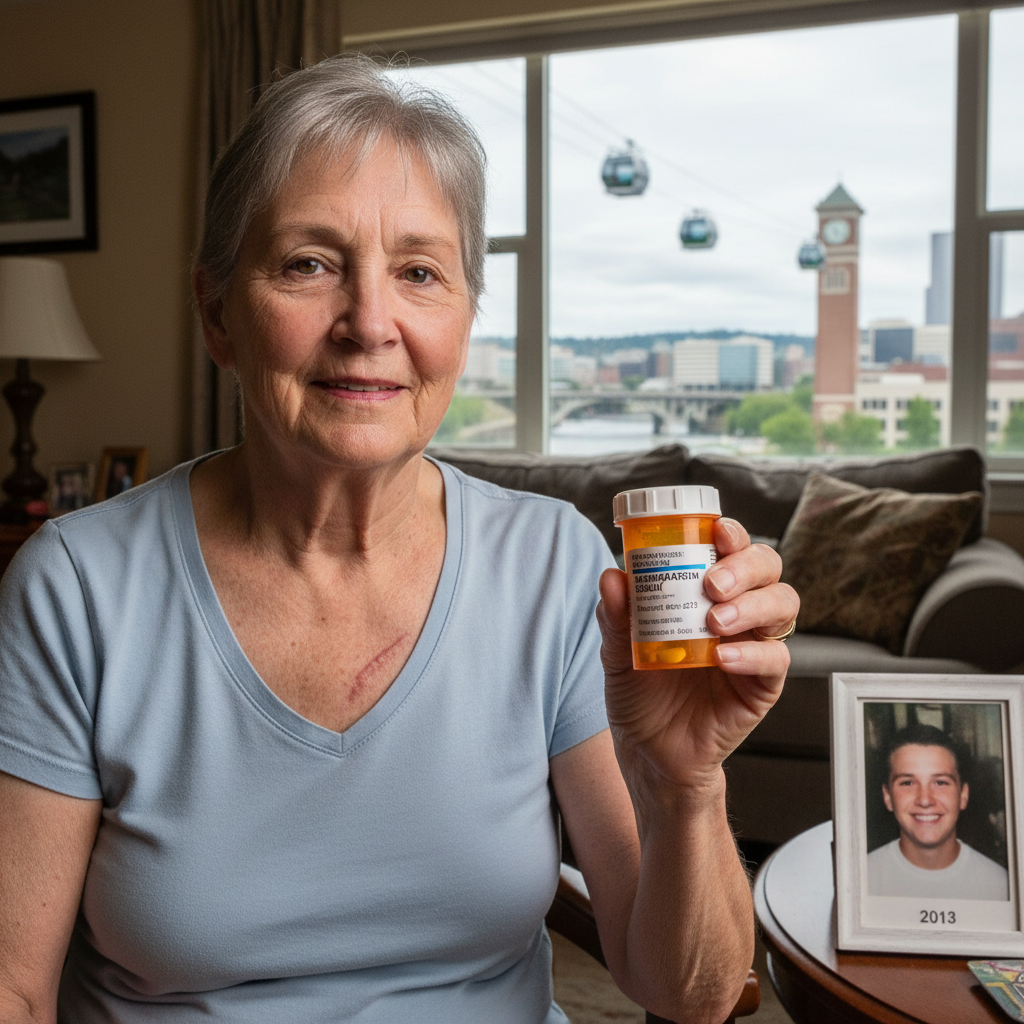
Robert Callahan
67 · Mechanical valve · Warfarin for 11 years · Spokane, WA
36 hours
First appointment
I live 55 miles from the nearest electrophysiologist. After my AFib diagnosis I was terrified — and I was looking at a six-week wait just to ask questions. Pulse had me on a video call with a cardiologist in 36 hours. She knew my file. She answered every question.
Dorothy Whitfield
71 · AFib · Post-cardioversion · Harlan County, KY
< 5 hrs
Response at 2am
My Apple Watch flagged an irregular rhythm at 2 a.m. I was panicking. I uploaded the ECG strip through the Pulse app and had a cardiologist message me back by 7 a.m. — explained exactly what it was, why it wasn't dangerous, and adjusted my beta-blocker. I slept that night.
Marcus Webb
52 · Post-stent · Dual antiplatelet therapy · Austin, TX
Board-Certified
All physicians ABIM-certified
HIPAA Compliant
Bank-grade encryption
ACC Member MDs
American College of Cardiology
42 States
Licensed & expanding
Pulse Cardiology
Patient Resource Guide
10 Questions to Ask
Your Cardiologist
Is my condition stable enough for telehealth management?
What imaging do you need from me before our first visit?
How do you handle medication refills between appointments?
What are the signs I should go to the ER vs. message you?
Can you coordinate with my local hospital if I'm admitted?
How often should I be seen given my specific diagnosis?
10 Questions to Ask Your Cardiologist
Most patients leave cardiology appointments with half their questions unanswered. This guide gives you the exact language to use — whether you're seeing us or someone else.
Written by Pulse cardiologists. Reviewed by patient advocates. Designed for people who want to be active participants in their cardiac care — not passive recipients of it.